 English
 Indian
 العربية
 Español
 Deutsch
 Türkçe
 Русский
 Français (Afrique)

Double champion de la C1 européenne : le PSG confirme son statut de meilleure dynastie du football avec 1xBet !
Le 30 mai, Budapest est devenue la capitale mondiale du football, accueillant l’un des plus grands événements sportifs de l’année 2026 – la finale de la Ligue des champions – dans la mythique Puskás Aréna. La victoire du Paris Saint-Germain face à Arsenal aux tirs au but a définitivement confirmé le statut du club français comme l’une des grandes puissances du football européen.
Le coup de sifflet final a immédiatement suscité une réaction du monde entier. Les médias sociaux et internationaux, ainsi que les plateformes de streaming, se sont enflammés de discussions autour de cet exploit historique. Un deuxième titre consécutif en LDC : ce succès a fait du PSG l’une des marques les plus influentes du football mondial et a marqué la naissance d’une nouvelle dynastie.
Sous les feux des projecteurs : le poids des attentes et le triomphe final piekny-pies.pl
Tout au long de la saison, l’équipe de Luis Enrique a été scrutée de près par la communauté sportive internationale. Après le sacre du PSG en Ligue des champions l’année précédente, les attentes étaient à leur comble : chaque match des champions en titre faisait la une de l’actualité mondiale.
Le parcours jusqu’en finale à Budapest a démontré la mentalité de vainqueur du PSG. Les Parisiens ont fait preuve d’un talent exceptionnel, à la hauteur de leur statut de meilleure équipe d’Europe. Les 120 minutes de la finale ont été un véritable spectacle, tenant les supporters en haleine jusqu’au coup de sifflet final, et certains moments resteront à jamais gravés dans l’histoire de la compétition reine des clubs.
L’intérêt suscité par la finale a dépassé les frontières du stade de 67 000 places. Les plateformes numériques ont enregistré un engagement massif du public : la réussite du PSG n’était pas qu’un simple fait divers, elle est devenue un événement planétaire, rassemblant les passionnés de sport du monde entier.
La recette du succès : le partenariat PSG-1xBet
Des performances de cette envergure exigent bien plus que de simples prouesses sur le terrain. Le parcours victorieux du PSG pendant plusieurs saisons a été activement soutenu par son partenaire officiel, 1xBet. En tant qu’acteur majeur du marché de l’iGaming, la marque a collaboré étroitement avec le club, lui apportant un soutien indéfectible lors des moments clés.
Cette collaboration illustre parfaitement l’alliance de l’ambition et de la volonté d’excellence. Tandis que le PSG repoussait sans cesse les limites du possible dans les stades européens, 1xBet créait des expériences immersives uniques pour des millions de fans à travers le monde, faisant le lien entre l’action sur la pelouse et les émotions des supporters.
Une ère de nouvelles opportunités
Cet exploit historique transforme le paysage du sport business et du secteur de l’iGaming. Fort de son statut de roi d’Europe, l’équipe s’est imposée comme l’une des marques les plus rentables de l’histoire du sport.
Des victoires de cette ampleur ouvrent de nouveaux horizons au marketing sportif et à l’industrie de l’iGaming. C’est là que le programme d’affiliation 1xPartners joue un rôle essentiel. La plateforme aide les partenaires à atteindre des taux de conversion et d’engagement élevés à l’international, en leur offrant les meilleures conditions : jusqu’à 50 % de RevShare, un système de rémunération flexible et des analyses approfondies des campagnes publicitaires sur les marchés internationaux.
La victoire à Budapest a uni des millions de supporters autour du club français, et le triomphe en Ligue des champions a une fois de plus confirmé que le Paris Saint-Germain est l’un des clubs de football les plus influents de notre époque, qui continue de repousser les limites sur et en dehors du terrain. Et à en juger par l’ampleur de cet accomplissement, une nouvelle ère s’ouvre pour le PSG !
Kaizer Chiefs to throw a lifeline to injured Orlando Pirates midfielder?
Kaizer Chiefs reportedly have an Orlando Pirates midfielder on their radar and with the PSL transfer window around the corner, could be on the verge of swooping in and luring him to Naturena.
Kabelo Dlamini is said to have caught Amakhosi’s attention.
“Chiefs are interested in Kabelo Dlamini and they have been following his situation. At the moment it’s more about monitoring what happens because he is still a Pirates player, but the interest is there,” Soccer Laduma reported.
Amakhosi are playing wait-and-see as to what Orlando Pirates decide to do with Dlamini in the upcoming transfer window.
Given the fact that he has been injured since November 2025 and is still finding his way back to full fitness, it may be in the best interest of both parties that he finds a new club.
Difficult season
Dlamini, 30, endured a difficult 2025/26 campaign under coach Abdeslam Ouaddou.
Injury setbacks disrupted his progress. As a result, Dlamini managed only five Betway Premiership appearances throughout the most recent season, while making four additional appearances across other competitions (CAF Champions League – 2, Carling Knockout – 1, MTN8 – 1).
For the Bucs, if they do not intend to use him they can gain from a deal or at least loan him out to grow as a player.
Whereas, for Dlamini, he needs to play more frequently to play his way back into contention for the national side.
According to Transfermarkt, Dlamini is valued at roughly R10 million.
However, all deals are negotiated through the players agent and the club and can substantially vary based on negotiations between them.
ALSO READ – KAIZER CHIEFS EXITS: THREE MORE PLAYERS EXPECTED TO LEAVE NATURENA
BIG CHANGES ON THE HORIZON AT NATURENA
Meanwhile, big changes are coming to Naturena.
Amakhosi management must appoint a new head coach for the 2026/27 season with an announcement expected soon.
Meanwhile, Aden McCarthy has reported left Naturena with several more departures expected in the coming weeks.
One can also bank on Kaizer Chiefs signing a raft of new players – as is their want based on recent seasons.
Would Kabelo Dlamini be a good fit at Kaizer Chiefs?
Let us know your thoughts in the comments section below …
From $1.5M contracts to players paying their own $2K transfer fees, a damning indictment of the Call of Duty League economics
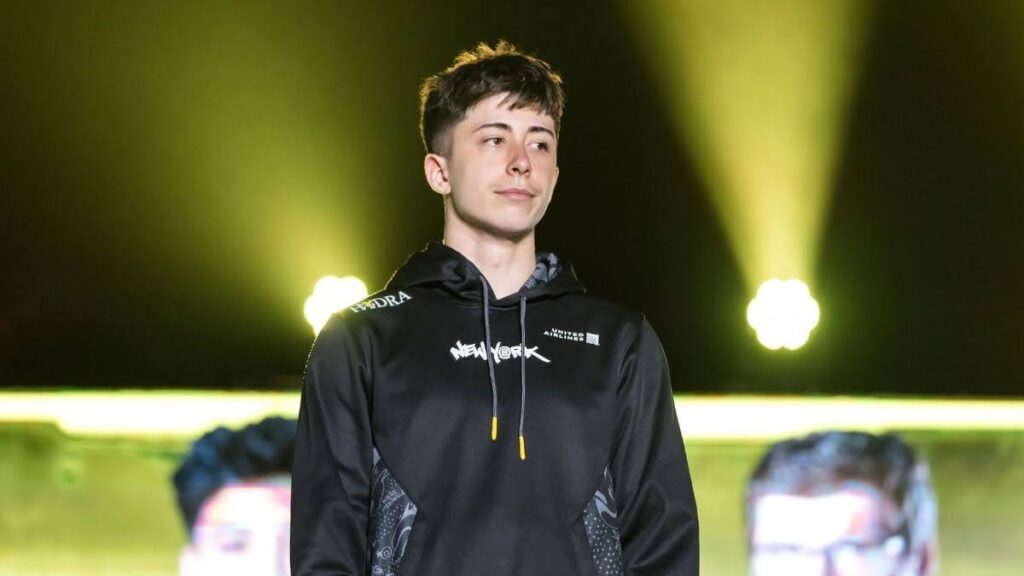
From multi-million-dollar deals and record-high transfers for League superstars just six years ago, to minimum-wage contracts and players “buying” their own transfer fees out, the Call of Duty League’s economic landscape has crashed and burned.
Call of Duty esports has always had a complicated relationship with Benjamin Franklin. The $100 bills flow like there’s no tomorrow when it comes to the annual releases, making the core game the fourth-highest-selling franchise of all time, but in an esports sense, it’s a different game.
While many competitor titles are built with a competitive mindset, such as VALORANT and Counter-Strike, the large majority of Call of Duty’s community are far from esports enthusiasts. It’s the one war that the franchise has never won, and its $69 billion owners have become satisfied with leaving the professional scene to an afterthought.
Yet, the Call of Duty esports scene has been the leading hub of console gaming for over 15 years, growing from the double-desked pool play pits to sold-out 30,000-seat arenas. With that, wages, buyouts, and prize pools have fluctuated more than the Modern Warfare-Black Ops tug of war.
Recent ebbs and flows on the Call of Duty League stock exchange have hit an all-time low, though, with a chasm of quality opening up, polarising tactics, and putting the player pipeline off making the jump to the professional league.
- “Stop doing yearly cycles and start thinking in terms of longevity”: Former Call of Duty boss discusses esports limitations
- Co-streaming shouldn’t count towards actual esports tournament viewership: Esports Insider debates
- Combo Breaker 2026 was a sad reminder that the FGC can still be uncomfortable for women
Every Cloud9 Has A Thin Golden Lining
For the last three seasons, especially, almost every team in the league has suffered from a lack of funding, scaling back the caliber of players they can attract due to budget wages and limited support. It’s the reason so many teams have sold their spots and why others have merged to join forces with bigger sharks in the industry, like Miami Heretics, G2 Minnesota, and Toronto KOI.
Arguably, the biggest change in philosophies is Cloud9 New York. Typically, the old Subliners’ ownership operated with a sensible freedom in their operations. Like everyone, they went big on star talent with a team blessed by Dylan “Attach” Price and Thomas “ZooMaa” Paparatto from the get go, and invested smartly over the years in spearheading legends like James “Clayster” Eubanks and rising phenoms like Paco “HyDra” Rusiewiez; the latter of whom was offered a reported $1.5 million three-year deal to stay with the org, back in 2022.
This seems like a distant memory, though, as just two years after winning their World Championship, Subliners sold their spot to Cloud9.
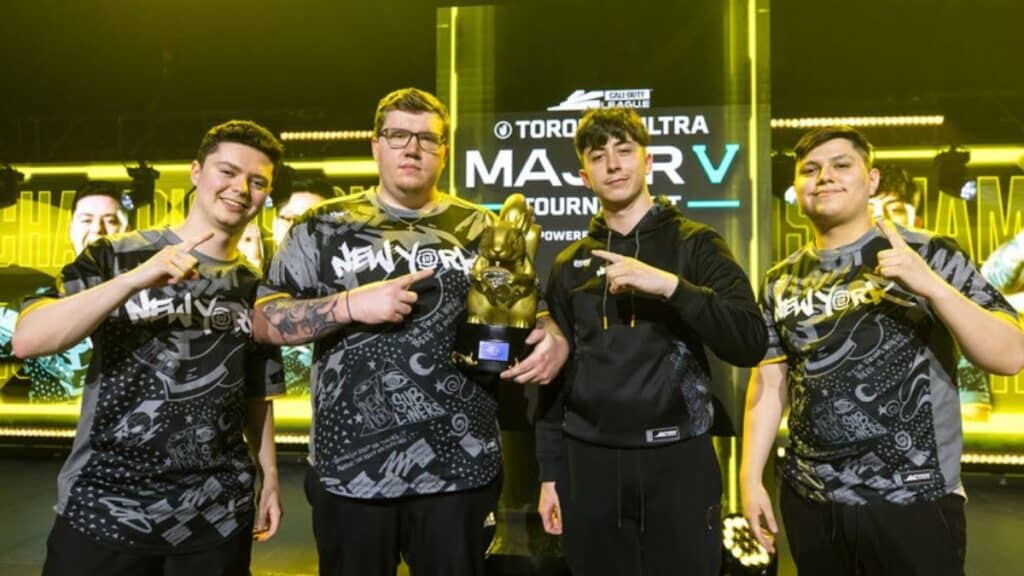
Cloud9 decided to operate in a completely different manner. At the start of the 2025/26 season, Cloud9 announced that it’s changing its structure and picking up a full Tier 2 team, hoping to grow throughout the year and become a long-term investment.
On shoestring budgets, helped by the removal of the CDL’s minimum requirement of a $55,000 annual salary in favor of state-mandated wage requirements ($33,300 in New York), Cloud9 reportedly told players that they will be heavily compensated on winnings and bundle sales, rather than a base wage – the waitresses of Call of Duty esports.
CEO Jack Etienne told Breaking Point: “Our thinking is focused on putting players in a better position while they are with us regarding MTX sales and prize earnings. Players and coaches will earn 100%.
“I don’t want to lose money for my investors, but I also want my players to earn. The key behind this will be to incentivize players to drive the most skin sales.”
It’s a system that they no doubt deploy in VALORANT to some extent, having signed the skin salesman himself in Jordan “Zellsis” Montemurro.
Unfortunately for the roster, they’ve failed to earn a penny in winnings, with an insurmountable gulf in class between them and the next caliber of teams.
This approach was capped off last week, when the team decided to pick up a new Tier 2 rookie, Jason “Wevy” Medina, who was contracted to Telluride Bush. The Barstool tangent revealed that Cloud9 refused to pay $10,000 for Wevy’s buyout but would agree to a $2,000 fee. However, this was soon found to have been money pulled from Wevy’s inevitable Esports World Cup earnings, as he would be the only one on his team not to keep the full amount.
From offering $1.5 to the CDL’s best player to refusing to pay $2,000 on a Challengers up-and-comer, Cloud9 is the biggest indictment of how the CDL economics have fallen beyond repair.
But it’s not just Cloud9.
Recoil Patterns Aren’t For Guns, They’re For Checkbooks
Toronto KOI is one of the most prestigious orgs in the CDL, having won multiple events throughout its tenure, similarly to Subliners/Cloud9, and it too has fallen into the checkbook shenanigans.
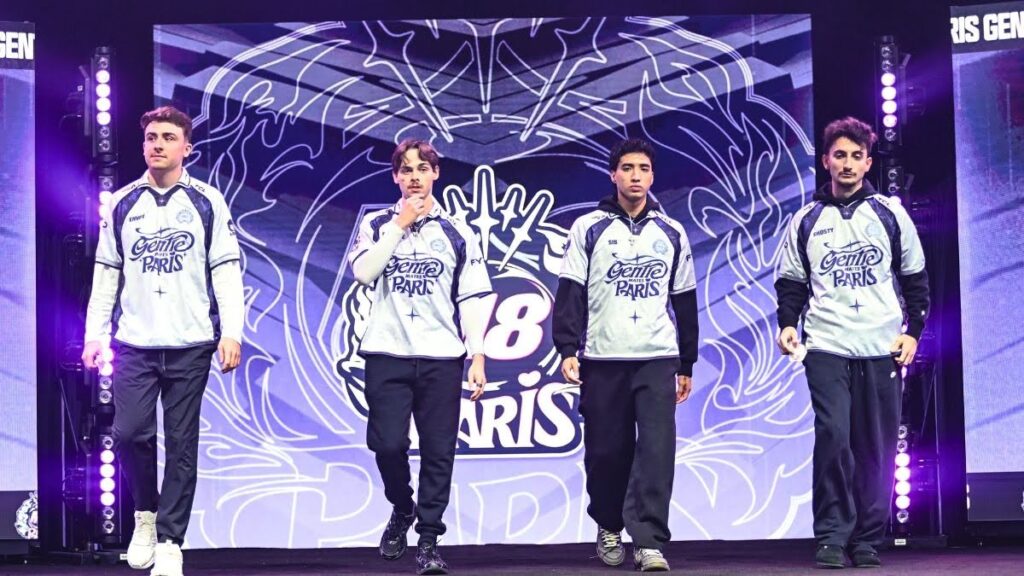
Earlier this week, Toronto Ultra – despite pushing for an outside chance at a World Championship upset – sold their best player, Joseph “JoeDeceives” Romero, to Paris Gentle Mates for a reported $125,000.
The buyout continued the precedent that the OverActive Media and KOI joint ownership group simply cannot afford to keep their top talent when the biggest fish come calling.
It wouldn’t be the first time, as Toronto let Thomas “Scrap” Ernst leave for LA Thieves, who now serves as one of the top three assault rifle players in the League. His skill was evident since being on Toronto, but money talked and the organization listened.
It’s a clear consequence, even a motivation not to do well, as the org recoups money in transfers rather than take the gamble on better results.
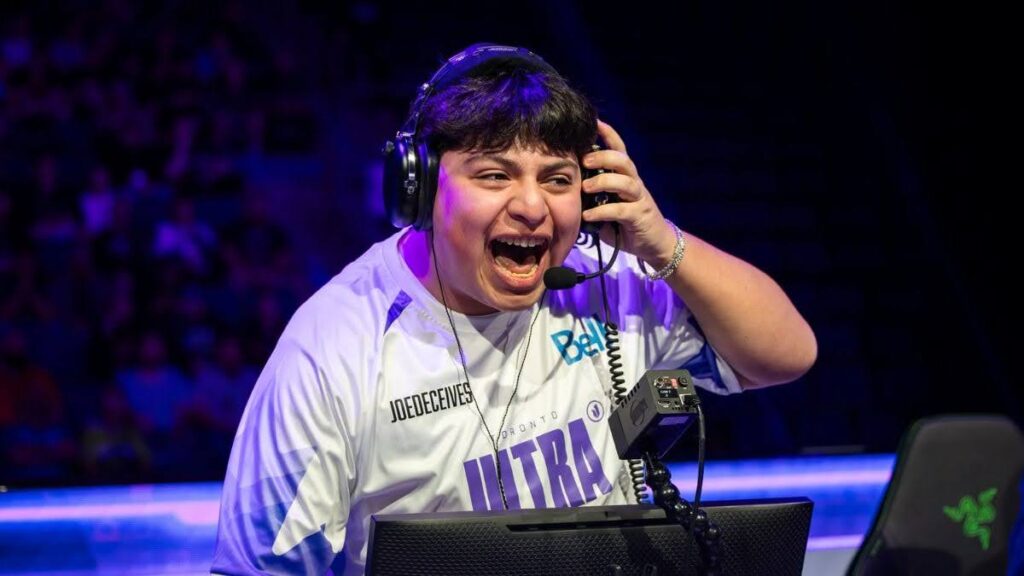
Following the departure of JoeDeceives, OverActive Media CEO Adam Adamou said: “The offer was one neither the org nor Joe was going to turn down. It was a good deal for the club and the right move for him, and those two don’t always line up.
“Letting him go was on me, and I’d make the same call again. He earned a shot at the bag with how he played and how he carried himself. When a guy gives a team everything Joe gave us, you don’t stand in the way. You do right by him. So that’s exactly what we did.
“This was a hard call, but it’s the one that sets us up to keep delivering for you. We’ll do what we’ve always tried to do best: find talent and grow it. But that’s a conversation for another day.”
From Adamou himself, the need for futureproofing the team outweighed the financial risk to push for a World Championship.
The Call of Duty League Needs a New Structure
Of course, revenue is hard to come by, and although Cloud9 and Toronto KOI are out there baiting their lives for the rest to benefit from, it shouldn’t be an indictment on them for choosing how to survive, but rather the League as its own entity.
It wasn’t always like this.
The birth of the franchised CDL system during the pandemic boom saw investors pour endless financial support into teams entering the elite league of arguably the most popular game of its time. From mainstream sports titans like the Kroenke Entertainment Group (Los Angeles Rams) and Sterling VC (New York Mets) to established esports giants partnering with huge sponsors, money wasn’t short in the early League days.
Now, that same system is hindering the esport. The locked licenses in the 12-team CDL are strangling the life out of the organizations, for very little gain back, and even dissuading more investing orgs from joining.
Earlier this year, SpaceStation Gaming CEO Shawn “Unit” Pellerin revealed that he tried to enter the scene, but the financial burden of the license was so heavy that it was almost impossible to justify.
“What we found after deep diving into the economics is that the license, which would be ‘transferred’ at a cost, was more of a liability than an asset,” he said. “The real value is the brands attached to the license, making it hard to justify a heavy cost to obtain it.
“The cost to operate vs revenue potential would also make it impossible to be competitive in the current ecosystem.
“The other issue entering as a new organization was the lack of available talent to build around. Challengers does its job cycling new talent to the CDL teams but lacks purpose for a Challengers teams to improve with limited opportunities to compete against the best.”
What’s clear is that the Call of Duty League needs to revise its structure. A less-gatekept partnership system, similar to Rocket League’s, could work, allowing the most devoted orgs to reap the rewards of skins while opening the bracket to more competition and an entry point for new teams.
However, it’s about time that the League and its teams realize that the 2019 goldmine is no longer there. Sponsors are harder to come by, content is harder to profit from now that Warzone has plummeted, and direct capital investment carries a huge risk.
Of course, you can win, as Gentle Mates has proven, but there can only be a handful of these success stories, and there needs to be a lower running cost and greater emphasis on visibility.
The Call of Duty League never lacks for action, but there’s a real disconnect that is hurting everyone’s pockets.
The post From $1.5M contracts to players paying their own $2K transfer fees, a damning indictment of the Call of Duty League economics appeared first on Esports Insider.
Algérie à Nanterre : Une journée de cœur, de culture et de solidarité au service des malades en Algérie
Le samedi 6 juin 2026, la ville de Nanterre accueillera un événement exceptionnel placé sous le signe du partage, de la fraternité et de l’engagement humanitaire : « L’Algérie à Nanterre », organisé par l’Association Culturelle et Humanitaire DZ. Bien plus qu’une simple manifestation culturelle, cette journée a pour objectif de soutenir une cause profondément […]
L’article Algérie à Nanterre : Une journée de cœur, de culture et de solidarité au service des malades en Algérie est apparu en premier sur Shoot Africa.