 English
 Indian
 العربية
 Español
 Deutsch
 Türkçe
 Русский
 Français (Afrique)
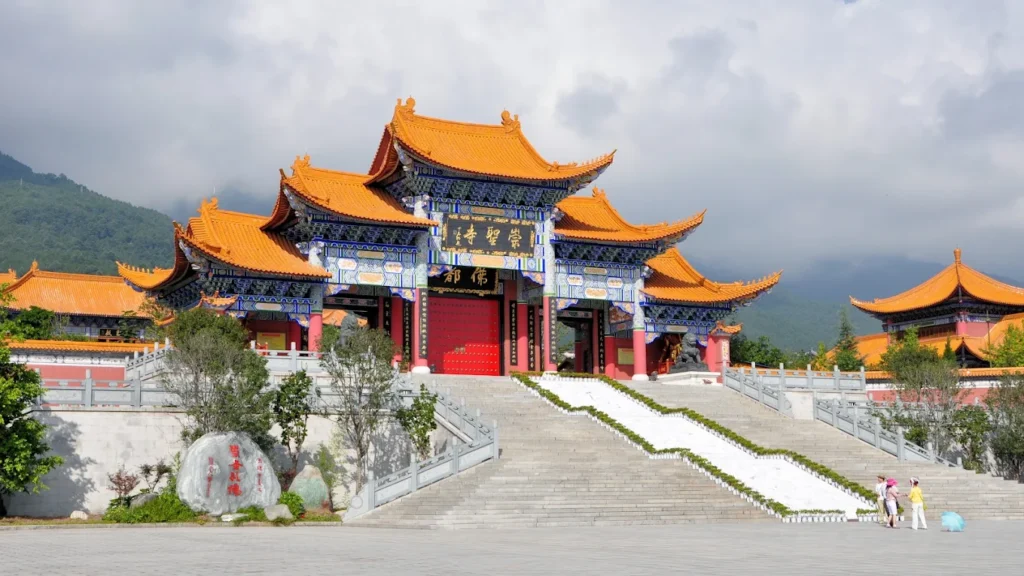
The race report I never expected to write.
This is not the race report I expected to write. I had planned to tell the story of a successful day at the inaugural IRONMAN 70.3 Dali in Yunnan Province. Instead, at 10:38am on Sunday 13 September, my race ended abruptly when a delivery worker tried to cross the bike course and I hit him at around 35 km/h.
Everything happened in an instant. I was aware of officials trying to hold pedestrians back at the side of the road. Then, suddenly, someone ran in front of the bike and there was nowhere to go.
I landed hard but felt no immediate pain. I tried to stand. The moment I put weight through my left leg, I felt the sickening, sharp pain that could only mean one thing: a fractured hip. The race was over. There would be no finish line, just a few tears and the prospect of three or four months of rehabilitation. And, to complicate matters, we were in provincial China.
From race course to hospital
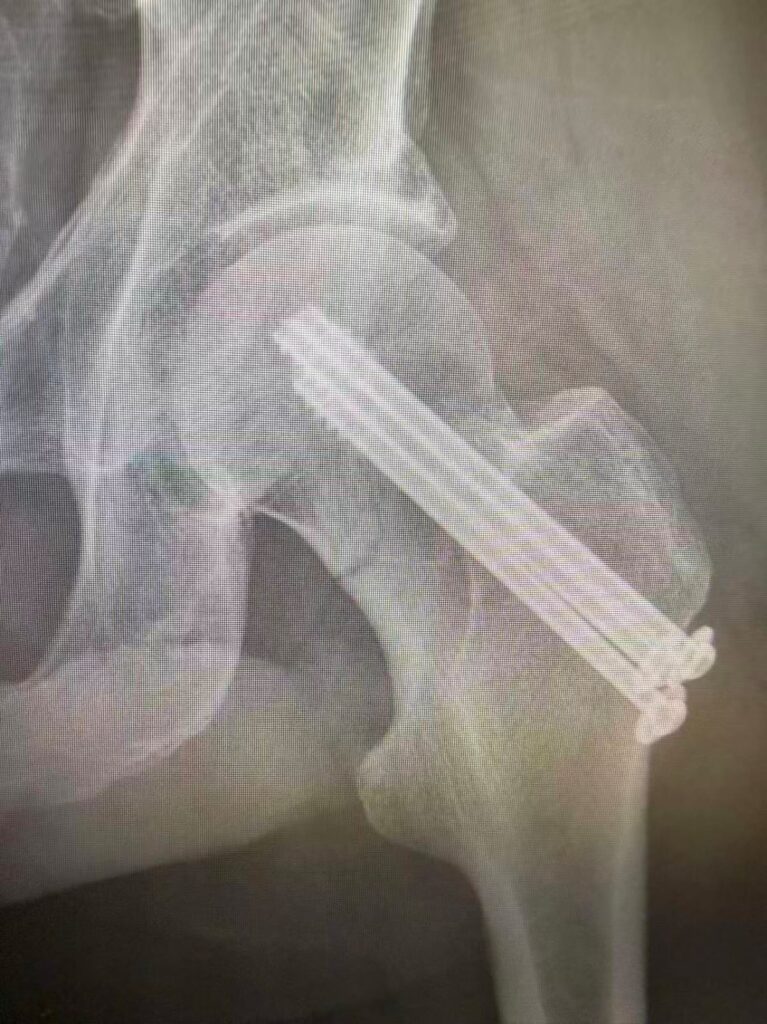
By coincidence, an ambulance was parked close to the scene. I was bundled inside and taken to the local hospital, where an X-ray quickly confirmed the fracture.
As I lay there, I wondered when Rianca would miraculously appear through the door and take charge. Using translation apps, I managed to explain that I was competing in the IRONMAN event taking place in the city. Eventually Nurse Rianca arrived, accompanied by two representatives from IRONMAN.
The first hospital was, let us say, a little rural in its approach. There were no painkillers and no drip. When I needed to be moved from the emergency stretcher to a ward bed, the staff summoned assorted friends and relatives who happened to be visiting patients that day to help lift me across. At that point, I decided that screaming the place down was an entirely reasonable response.
Rianca trained as a nurse in the Netherlands and can spot a speck of dirt from ten metres away. What followed was ten minutes of Rianca in full beast mode, delivering a series of very direct instructions through the translation app about hygiene, pain relief and the urgent need for a drip. When I needed to vomit, I was offered a half full waste paper basket.
Eventually, IRONMAN arranged for me to be transferred to another government hospital in Yunnan Province.
A calmer second chapter
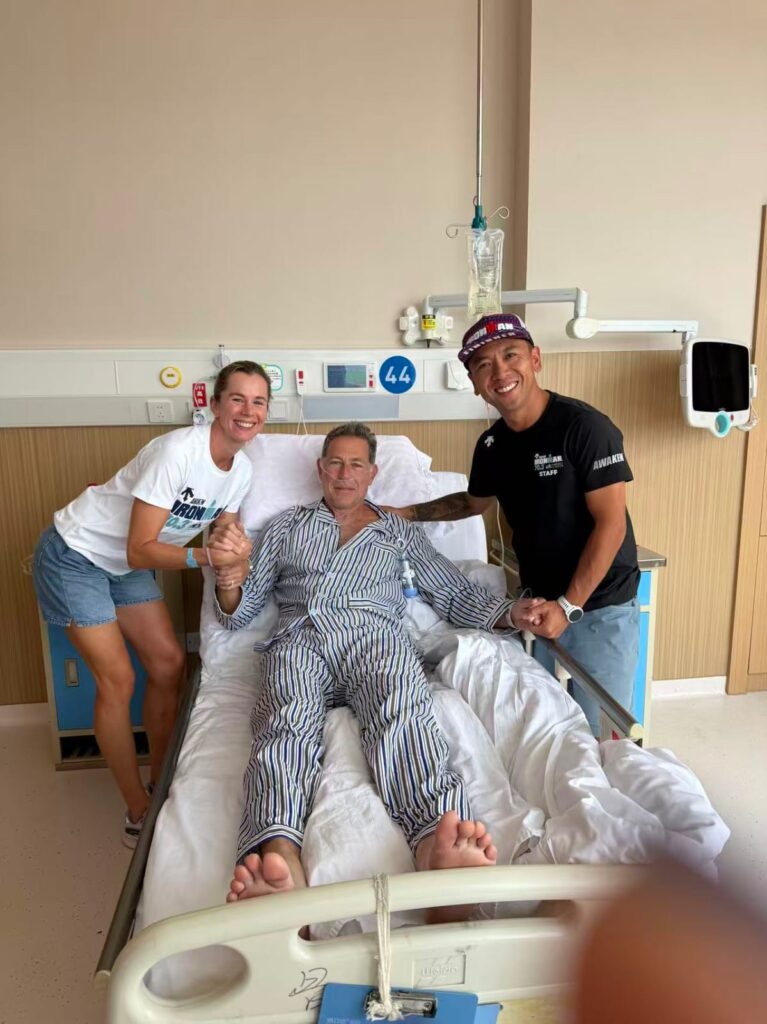
Everything suddenly became calmer. An English-speaking doctor who had trained in Sweden took charge. More X-rays confirmed the fracture, and I underwent surgery that Sunday night. It was delayed by 15 minutes for the Chinese nurses to shave my genitals.
The room was comfortable and Rianca was able to sleep in an adjoining room, although my bed did resemble something from a British prison cell - not that I have any first-hand experience.
Monday morning arrived in a haze of exhaustion, stiffness and fever. Lying there, you start asking yourself difficult questions. How are we going to get back to Dubai? Is it time to retire from racing? Should I stop putting Rianca through situations like this? Not quite my usual 'When is the next race?' mindset.
On Tuesday we contacted our global health insurer, Cigna. They immediately began working with International SOS on a plan to get us safely back to Dubai. The experience was seamless: excellent customer service combined with the calm, precise execution of a complicated plan.
IRONMAN were very helpful as well. Their team did everything they could to ensure I received the best medical care available, and they provided me with crutches and compression socks for the journey home. They even ordered a pizza for dinner and promised a free entry for next year!
Why Dali?
So what should this race report have been about, and why had we chosen Dali?
Trisutto runs a training camp in Suzhou. Our original plan was to travel there after the race to inspect the facilities before potentially bringing Sported Coaching athletes over in 2027, possibly ahead of IRONMAN 70.3 Chongming. We would then finish the trip with a few days of sightseeing in Shanghai.
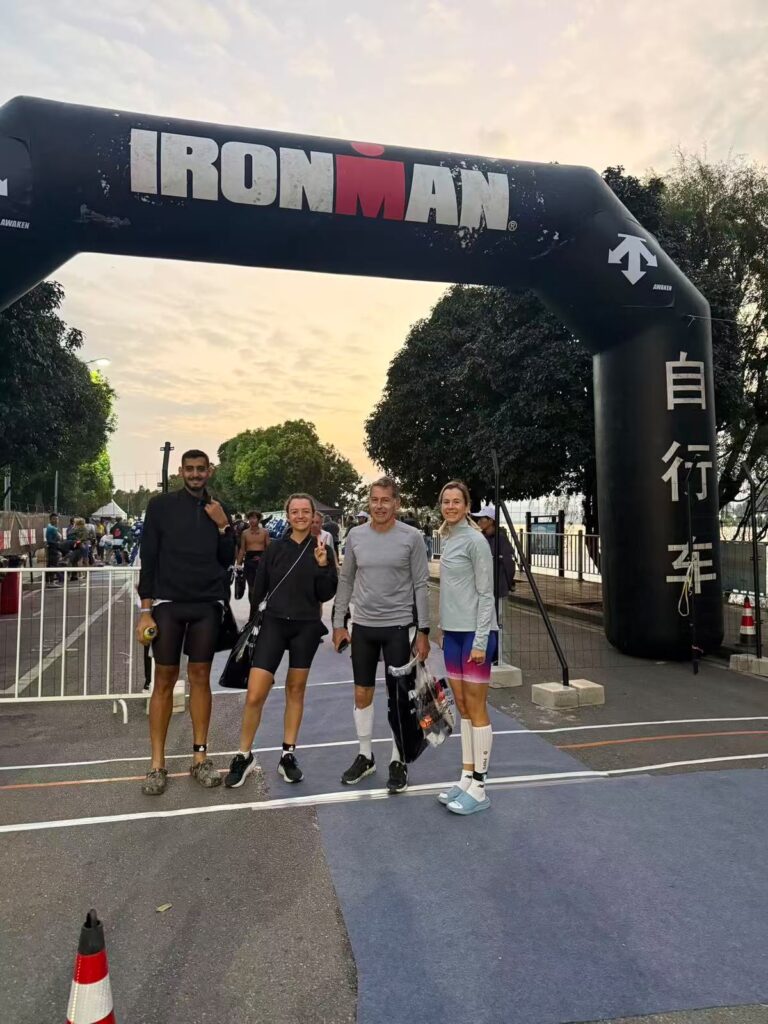
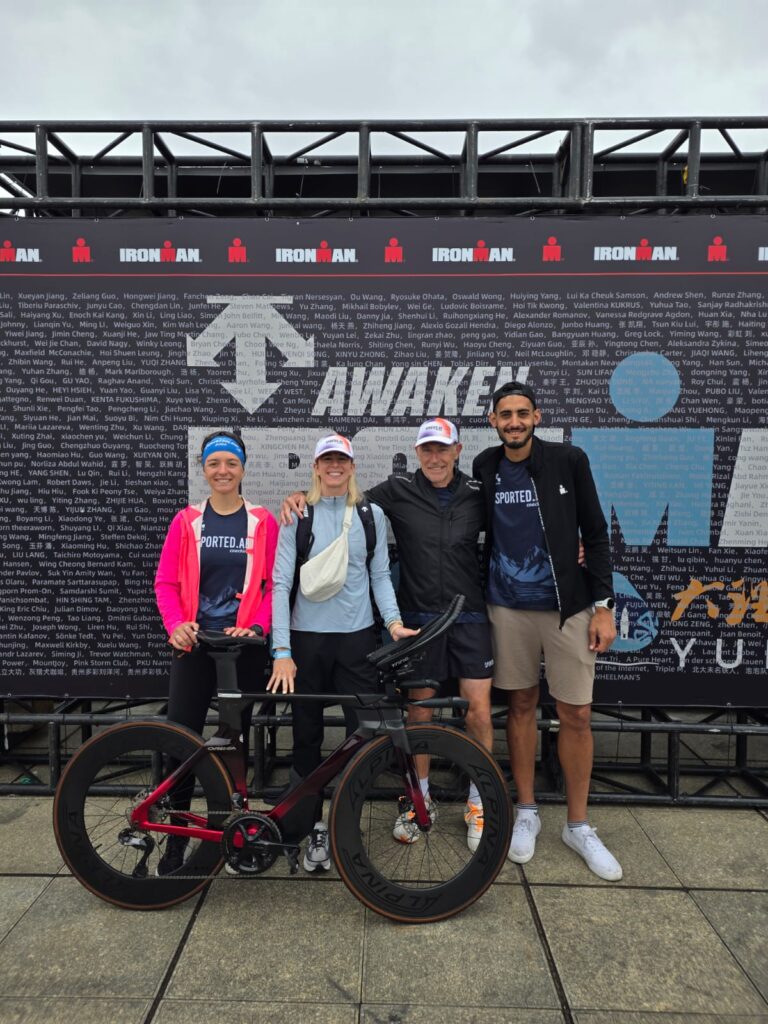
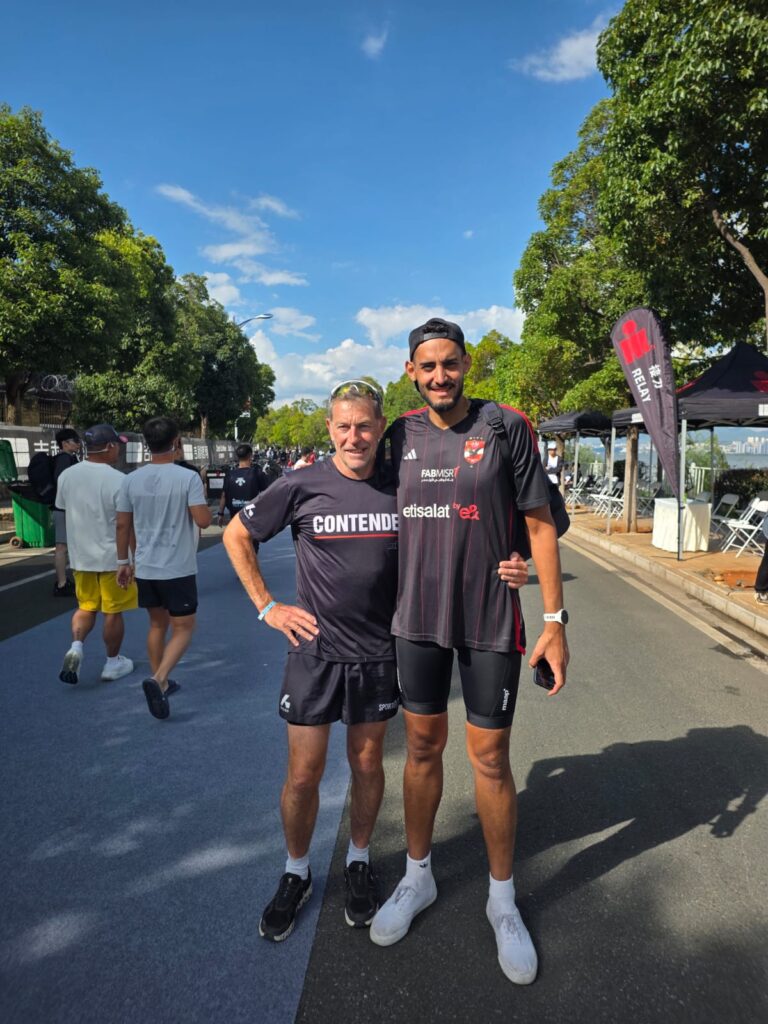
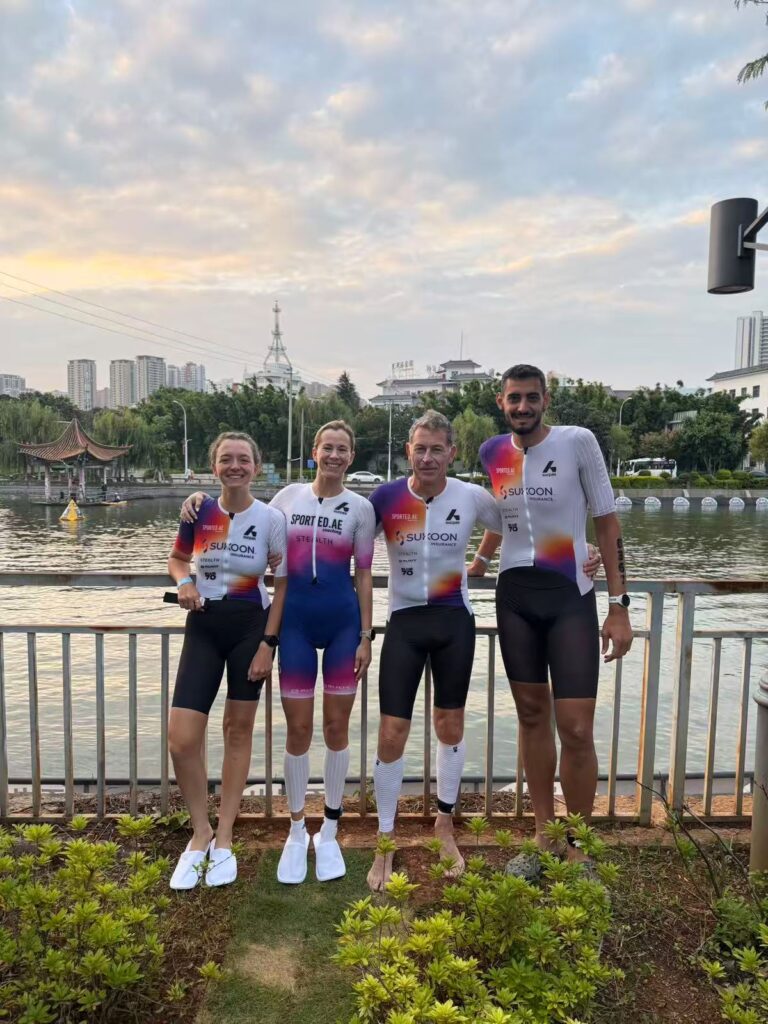
This was the first edition of IRONMAN 70.3 Dali. The city sits at roughly 6,000 feet above sea level, so we arrived a week before the race to acclimatise properly. We stayed outside the main city in a small lakeside town on Erhai Lake. Part of the attraction was the chance to explore the beautiful countryside while preparing for the race. I was joined on the trip by two of my Sported Coaching teammates: Hisham Al Khattab and Eva Graf.
In reality, the sightseeing was limited. We made one visit to Dali Ancient City, which was an assault on the senses, while a temple in the mountains provided the complete opposite: quiet, tranquil and peaceful. The surrounding countryside remained very rural. We kept the training gentle, with easy rides, short runs and one practice swim in the lake as we adjusted to the altitude.
Learning how China works
Getting around China independently is not easy. Translation apps are essential, and for those to work reliably you need either a local SIM or an eSIM. WeChat is your messaging service, payment system and practical lifeline rolled into one. Without a local connection, simple tasks such as ordering food, paying in shops or arranging transport become surprisingly difficult.
It also helps if you do not commit acts of self-sabotage. On arrival in Guangzhou, I lost my passport while collecting the bike boxes and assorted luggage. We discovered it was missing when we tried to check into the airport hotel. After a frantic taxi ride back to the airport, we found that the passport had miraculously reached Lost and Found in less than 90 minutes - a small example of how efficient China can be.
Leaving a personal notebook on the Emirates flight added to the stress of settling in. At this point I said to Rianca, 'This trip is jinxed!' Remarkably, the notebook was also located and couriered to our hotel in Dali for less than AED 10. China is cheap!
Food brought its own challenges, particularly in rural areas where Western alternatives were scarce. After two days, Rianca was ready to check out and head home, through a combination of tech issues and not loving the local cuisine. Fortunately, I managed to persuade her to stay - a decision she may have reconsidered a week later.
Race weekend
On the Thursday before the race, we relocated to Dali city. Hisham, Eva and myself, rode the 12 km to the hotel on our time-trial bikes while our luggage and three bike boxes followed in a pickup truck. There we reunited with Caroline Bridges who had flown in from Suzhou, and began the final preparations for race day.
The race organisation was first class. During Saturday morning's practice swim, at least 15 Zodiac dinghies and a similar number of kayaks monitored a 500 m course. Swimming at altitude requires adjustment and can provoke anxiety or panic, so the level of safety cover was impressive.
The briefings were delivered clearly, registration ran smoothly and the whole event felt well organised. The expo was small, but one thing was obvious: Chinese triathlon brands are coming, and the rest of the industry should take note.
With the bikes racked and everything ready, we settled down to a very local pre-race meal of rice and duck.
Race morning
On race morning we walked to transition. The point-to-point swim required a 2 km shuttle journey to the start.
My plan was deliberately conservative. For the first 300 m, I swam slower than easy, giving myself time to find a rhythm and allow my heart rate to settle. By and large, it worked. The swim was not fast, but it was controlled and it was done.
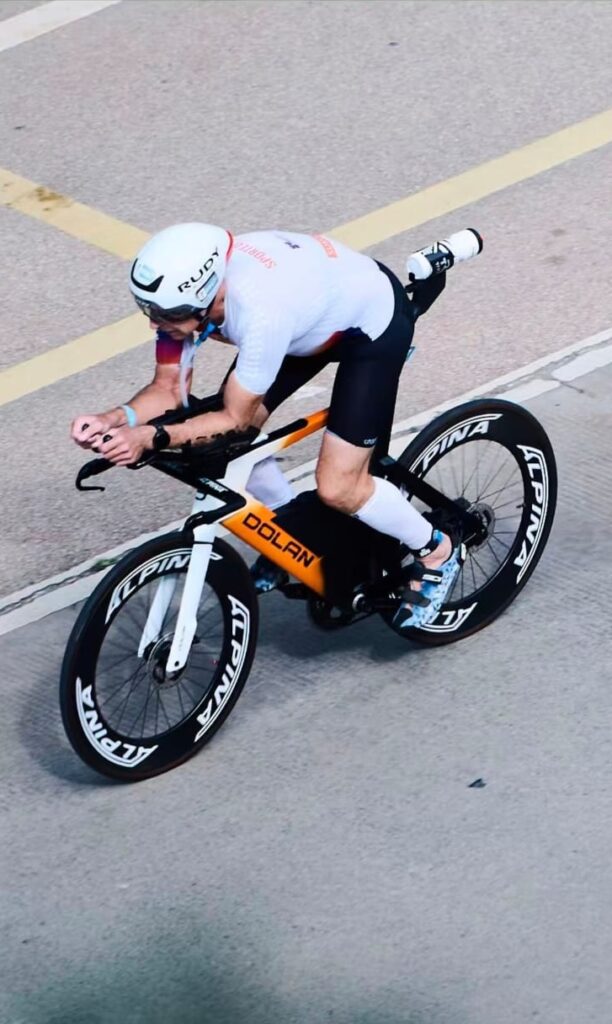
The bike course consisted of three 30 km laps, made up of out-and-back sections along the lakeshore. Conditions were almost perfect: sunshine, light cloud and very little wind. I was holding a steady 35 km/h and thoroughly enjoying myself. I was riding within my limits because of the altitude and because I knew there was still a long run to come.
And then, at 10:38am, someone ran onto the bike course.
That single moment changed the race, the trip and the months ahead. Instead of a medal and Shanghai, there was surgery, rehabilitation and the task of getting home safely. For now, my next event is rehabilitation: recover properly, rebuild patiently and take the next step when it is time.